
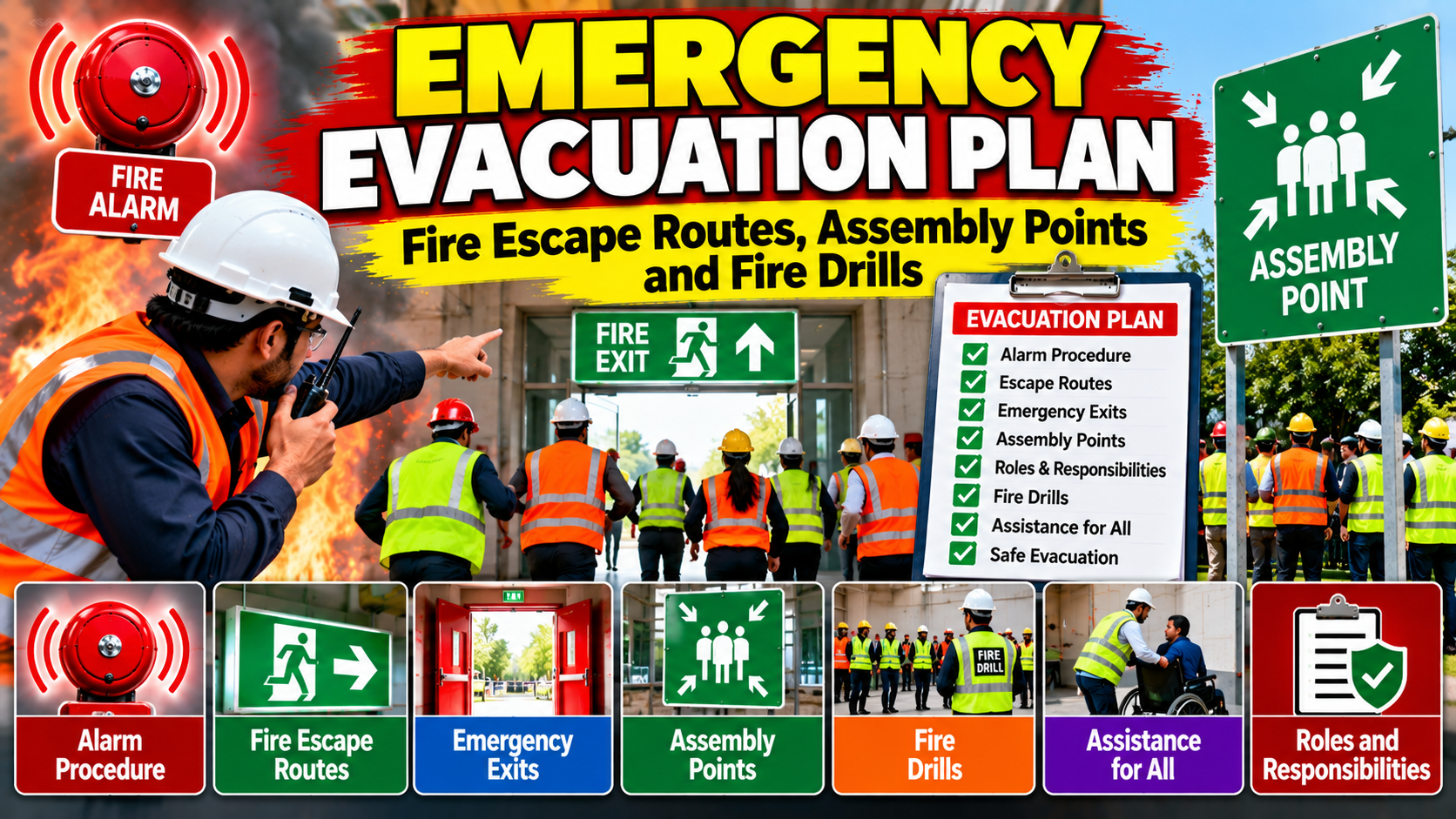
Emergency Evacuation Plan: Fire Escape Routes, Assembly Points and Fire Drills
During a fire emergency people may have a limited amount of time to reach safety.
An effective emergency evacuation plan helps people understand where to go and what to do.
What is a Fire Evacuation Plan?
A fire evacuation plan explains how people will leave a building safely during a fire or other emergency.
It should consider:
Escape routes
Emergency exits
Assembly points
Alarm arrangements
Fire wardens
Visitors
Contractors
People requiring additional assistance
Emergency communication
Escape Routes
Escape routes should be:
Clearly identified
Kept
Appropriately illuminated
Suitable for the number of people using them
Available for emergency evacuation
Fire doors and emergency exits should be managed according to the buildings fire safety arrangements.
Assembly Point
A suitable assembly point should be identified away from danger.
Workers should know:
Where it is
How to reach it
Who is responsible for headcounts
How missing persons are reported
Fire Wardens
Fire wardens or emergency marshals may assist with:
Raising awareness
Supporting evacuation
Checking designated areas where appropriate
Directing people towards exits
Reporting information to the emergency coordinator
They should not put themselves at risk.
Fire Drills
Fire drills can help workers practise the emergency procedure.
A drill may evaluate:
Alarm response
Evacuation time
Exit routes
Assembly arrangements
Communication
Headcount procedures
Problems encountered during evacuation
A drill should be followed by a review of lessons learned.
Assisting People During Evacuation
Emergency plans should consider people who may need assistance including:
People with mobility limitations
Visitors unfamiliar with the building
New workers
People with sensory impairments
Anyone who may need assistance understanding the emergency instructions
Common Evacuation Mistakes
Avoid:
Blocking emergency exits
Storing materials, in escape routes
Ignoring alarms
Returning to collect personal belongings
Re-entering the building without authorisation
Failing to report missing people
An evacuation plan is effective only when people understand and practise it.
Know the alarm. Know the escape route. Know the assembly point.