
Fire Extinguishers: Types, Classes of Fire and Safe Use
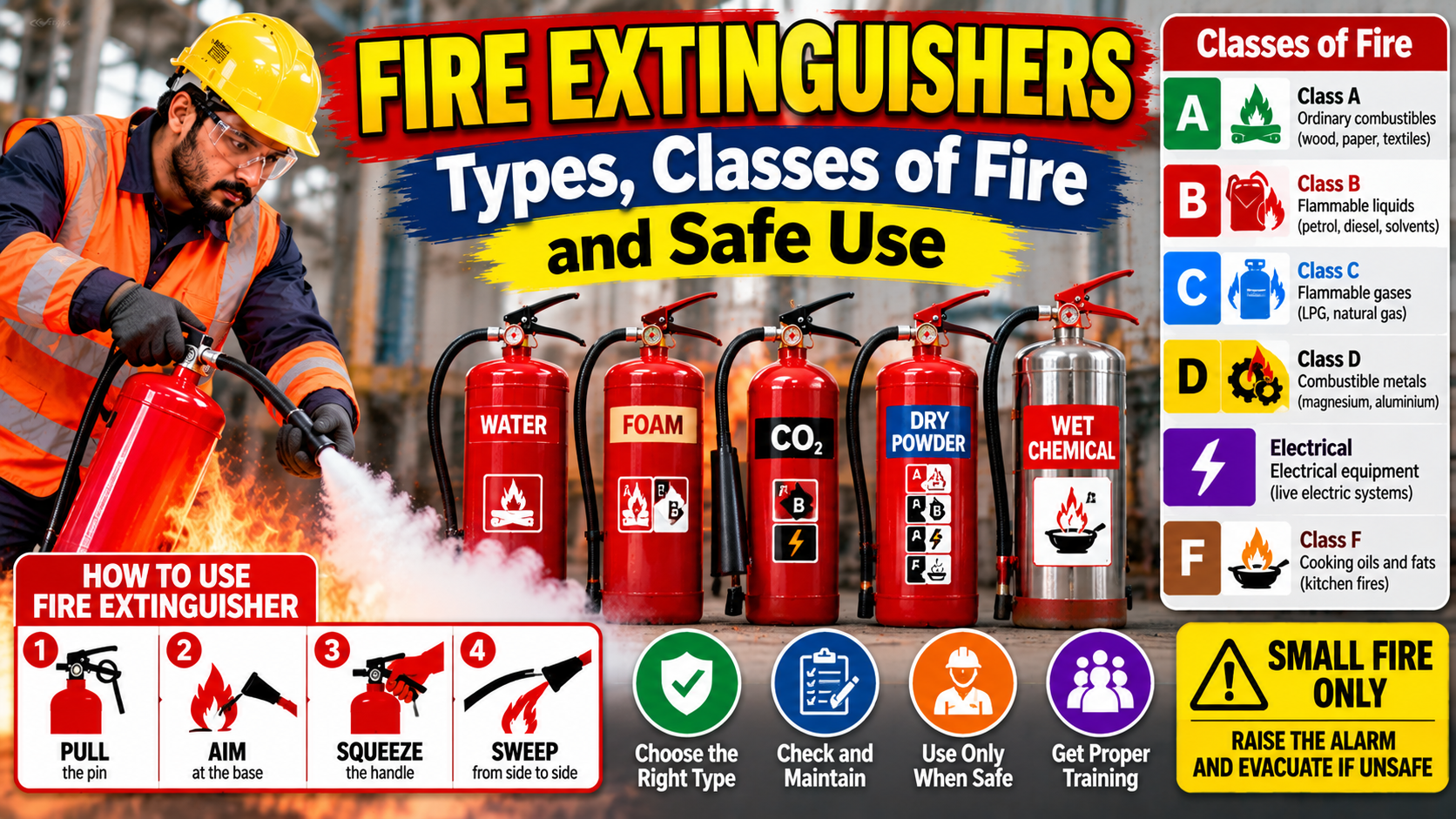
Fire extinguishers are tools made to stop small fires in the early stages. They can help control a fire before it grows out of control. Using the wrong type of extinguisher can make things worse. Choosing the one depends on the kind of fire and any hazards nearby.
Common Classes of Fire
Fires are grouped into classes based on what's burning. The classification may differ by country or industry so always follow rules and guidelines.
The common types are:
Class A: Fires involving ordinary materials like wood, paper and cloth
Class B: Fires involving flammable liquids such as petrol or oil
Class C: Fires involving flammable gases like propane or natural gas (in some systems)
Class D: Fires involving combustible metals like magnesium or aluminum
Electrical equipment: Often seen as a special hazard rather than its own class
Class F/K: Fires involving cooking oils and fats. Used in kitchen settings
Common Types of Fire Extinguishers
Water Extinguisher
This type is good for Class A fires. It works well on things like wood or paper. Never use water on electrical fires or where electricity is still on. Water conducts electricity. Can cause serious harm. Also avoid using it near chemicals that react badly with water.
Foam Extinguisher
Foam is useful for some Class A and Class B fires. It forms a blanket over the surface to cut off oxygen. It’s often used in places like garages or workshops. Always check the rating and approval to make sure it’s suitable for your situation.
Dry Powder Extinguisher
These are versatile. Work on Class B, Class C and sometimes Class D fires. The powder smothers the fire. Interrupts the chemical reaction. However dry powder can make breathing difficult. Reduce visibility. Cleanup can be messy and dusty. Use when necessary and with caution.
Carbon Dioxide Extinguisher
CO₂ extinguishers are effective on fires and certain liquid fires. They don’t leave residue, which makes them ideal for areas like server rooms.They have limitations. Only use them in ventilated spaces. Never aim directly at people. Keep a safe distance due to cold discharge temperatures.
Wet Chemical Extinguisher
Designed for cooking oil and fat fires these are commonly found in kitchens. The chemical reacts with oil to form a soapy layer that traps steam and stops re-ignition. This type is best for kitchens or food preparation areas.
Basic Fire Extinguisher Use
Only try to use an extinguisher if all of these conditions are met:
The fire is small. Not spreading fast
You have the correct type of extinguisher
You know how to use it properly
There is an escape path behind you
You’ve already sounded the alarm
If any of these conditions aren’t met do not attempt to fight the fire.
A helpful way to remember the steps is PASS:
P – Pull the pin at the top of the extinguisher
A – Aim the nozzle at the base of the flames
S – Squeeze the handle
S – Sweep from side to side across the fire
Always follow the manufacturer’s instructions and your workplace safety procedures.
When Should You Not Fight a Fire?
Never try to use an extinguisher if:
The fire is growing
Thick smoke fills the area
The right extinguisher isn’t available
You have no training
Your way out could become blocked
There is a risk of explosion
The fire involves something unknown
You feel unsure about the safety of the situation
In those cases raise the alarm immediately. Get everyone out safely.
Fire Extinguisher Inspection
To ensure extinguishers work when needed they must be:
Placed in the locations
Easy to see
Within reach
Matched to the possible fire risks
Regularly checked
Kept in condition
Follow inspection requirements set by your local rules and keep records of maintenance.
Fire extinguishers play a role in stopping small fires quickly.They are not enough, on their own. Fire prevention, detection systems, evacuation plans and emergency response are just as important. Always stay alert and ready. Never take unnecessary risks. Safety comes first.