
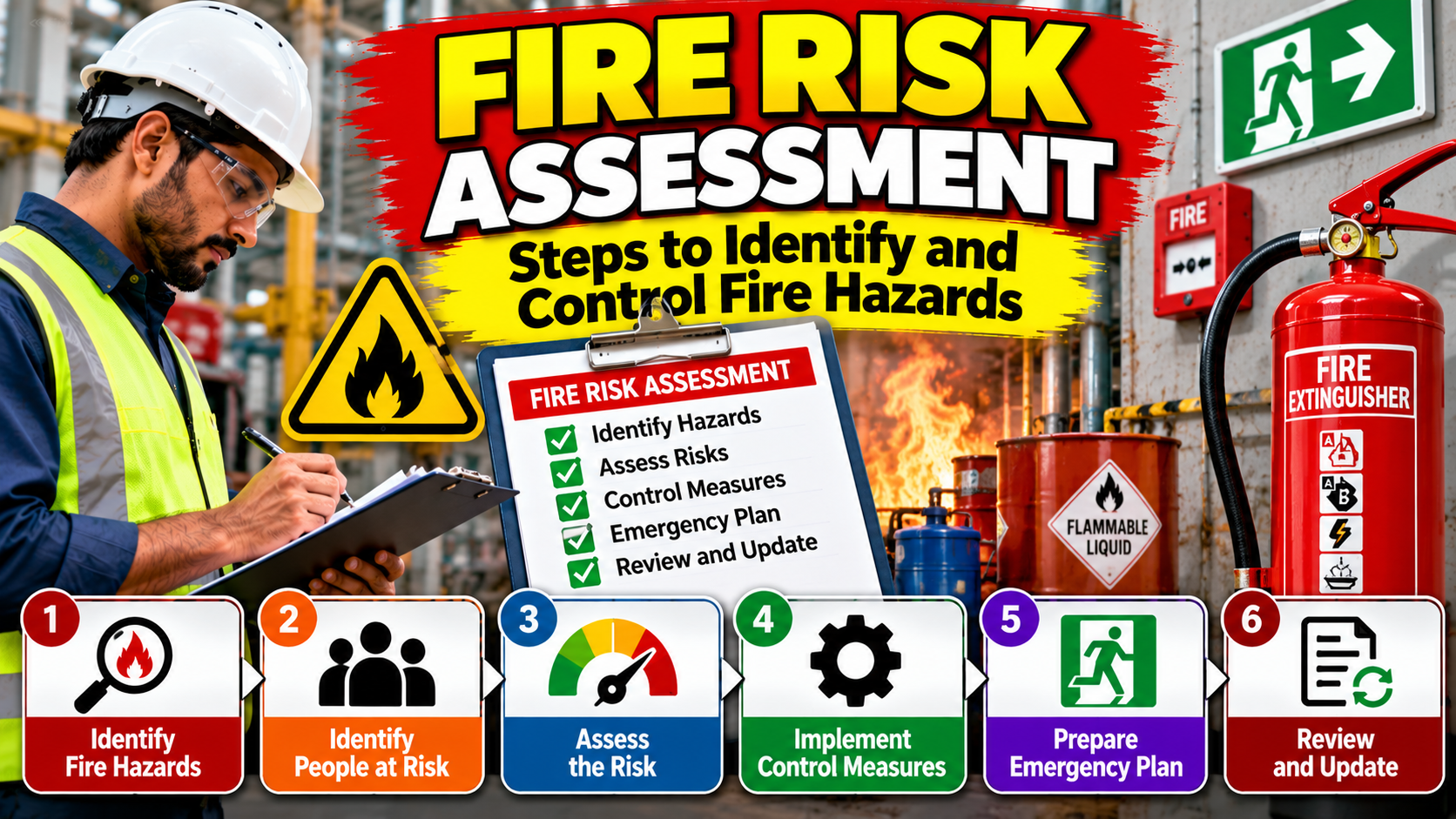
Fire Risk Assessment: Steps to Identify and Control Fire Hazards
A fire risk assessment is a process used to identify fire hazards evaluate risks and determine appropriate control measures.
It is a part of an effective fire safety management system.
What is a Fire Risk Assessment?
A fire risk assessment considers:
- Sources of ignition
- Sources of fuel
- Sources of oxygen
- People at risk
- Existing fire precautions
- Emergency arrangements
- controls required
Step 1: Identify Fire Hazards
Look for potential ignition sources such as:
- Electrical equipment
- Hot surfaces
- Open flames
- Welding
- Grinding
- Smoking materials
- Heating equipment
Also identify combustible materials such as:
- Paper
- Wood
- Packaging
- Plastics
- Flammable liquids
- Gases
- Waste materials
Step 2: Identify People at Risk
Consider:
- Employees
- Contractors
- Visitors
- Customers
- Security personnel
- Maintenance workers
- Night‑shift workers
Give additional consideration to people who may require assistance during evacuation.
Step 3: Evaluate the Risk
Consider:
- Likelihood of fire × consequences
The assessment should consider the possibility of ignition and the potential impact on people and property.
Step 4: Identify Fire Controls
Controls may include:
- Removing ignition sources
- storage of combustibles
- Fire detection
- Fire alarms
- Emergency lighting
- Fire doors
- Fire extinguishers
- Automatic suppression
- Emergency exits
- Evacuation procedures
Step 5: Prepare an Emergency Plan
The emergency plan should explain:
- How the alarm is raised
- What workers should do
- Evacuation routes
- Assembly point
- Emergency contacts
- Responsibilities of fire wardens
- Arrangements for visitors
Step 6: Review the Assessment
Review the fire risk assessment when:
- Processes change
- Buildings change
- New equipment is installed
- New chemicals are introduced
- There is a fire or near miss
- Existing controls are no longer
Fire Risk Assessment Example
Hazard: Electrical equipment overheating
People at risk: Employees and visitors
Potential consequence: Fire and smoke exposure
Existing controls: inspection and maintenance
Additional controls:
- Prevent circuit overloading
- Remove damaged equipment
- Maintain electrical systems
- Keep combustible materials away, from heat sources
- Provide suitable fire detection
A fire risk assessment should result in practical improvements, not simply paperwork.
The objective is to identify fire hazards control them and protect people from the consequences of fire.